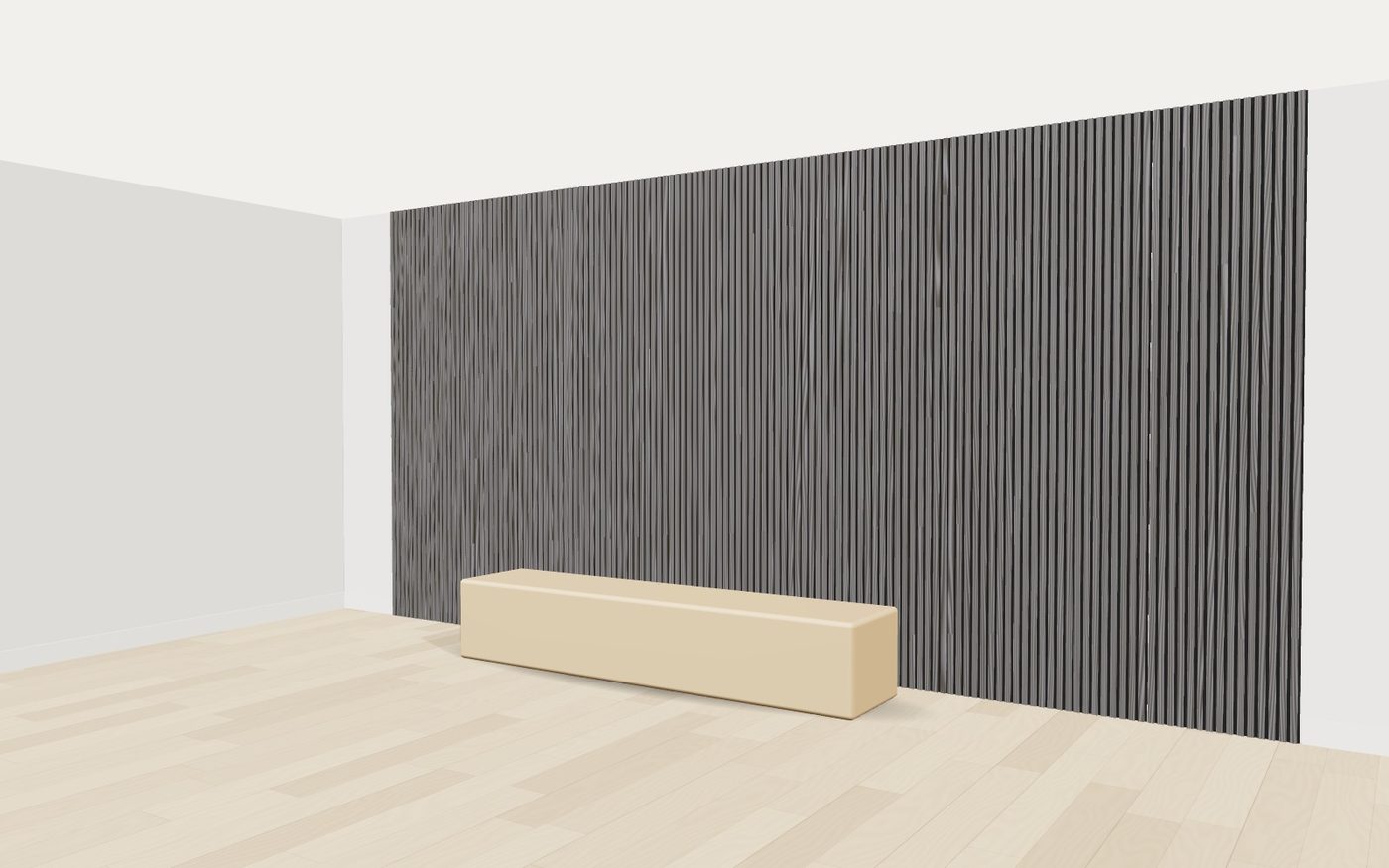
The short answer
Yes, for echo. The felt behind and between the slats absorbs sound that would otherwise bounce off hard walls, so a room sounds calmer and speech is clearer. Our panels are rated Class A for sound absorption under EN ISO 354. They don’t soundproof a wall: they won’t stop a neighbour’s TV or footsteps coming through. That depends on the wall and floor assemblies.
Absorption vs. sound isolation
| Absorption (what panels do) | Isolation (what walls do) | |
|---|---|---|
| Problem it solves | Echo, a boomy or harsh-sounding room | Noise passing between suites |
| How it’s rated | Absorption class or NRC | STC and IIC of the assembly |
| How it works | Soft, porous material turns sound into a little heat | Mass, air gaps, resilient channel and insulation in the wall |
| Where it goes | On the surfaces inside the room | Inside the wall or floor build-up |
What Class A means
EN ISO 354 measures how much sound a material absorbs in a reverberation room. The results are graded from Class A (the most absorbent) to E. Class A means the panel absorbs most of the mid-range sound that reaches it, which is where speech sits.
How much wall to cover
- One feature wall in a living room or bedroom is usually enough to take the edge off the echo.
- Lobbies, gyms and party rooms with hard floors and high ceilings need more: two walls, or a wall and part of the ceiling.
- Spread it out. Panels on facing walls stop sound bouncing back and forth (flutter echo) better than the same area on one wall.
- Add an air gap. Mounting on battens, with insulation behind, improves low-frequency absorption.
Where they make the biggest difference
New rental buildings are full of hard surfaces: vinyl plank floors, large windows, drywall and little furniture in common areas. Amenity rooms and lobbies are where tenants and visitors notice echo first, and where a slat wall also does the most for the look of the space.
If you need quieter suites
For sound between suites, look at the wall and floor assemblies: resilient channel, double stud walls, insulation, and solid core doors on bedrooms. Our guide on solid vs. hollow core doors covers the door side.
Notes
Acoustic results depend on the room, the mounting and the area covered. For rooms with specific targets, such as studios or theatres, work with an acoustic consultant.
Common questions
Do acoustic slat panels reduce noise from neighbours?
Not much. They absorb sound inside the room but don’t block sound travelling through the wall. Sound isolation comes from the wall and floor assemblies.
Are acoustic slat panels worth it?
For echo, yes: they make hard-surfaced rooms sound calmer while adding a finished wood wall. For noise between suites, put the money into the wall assembly instead.