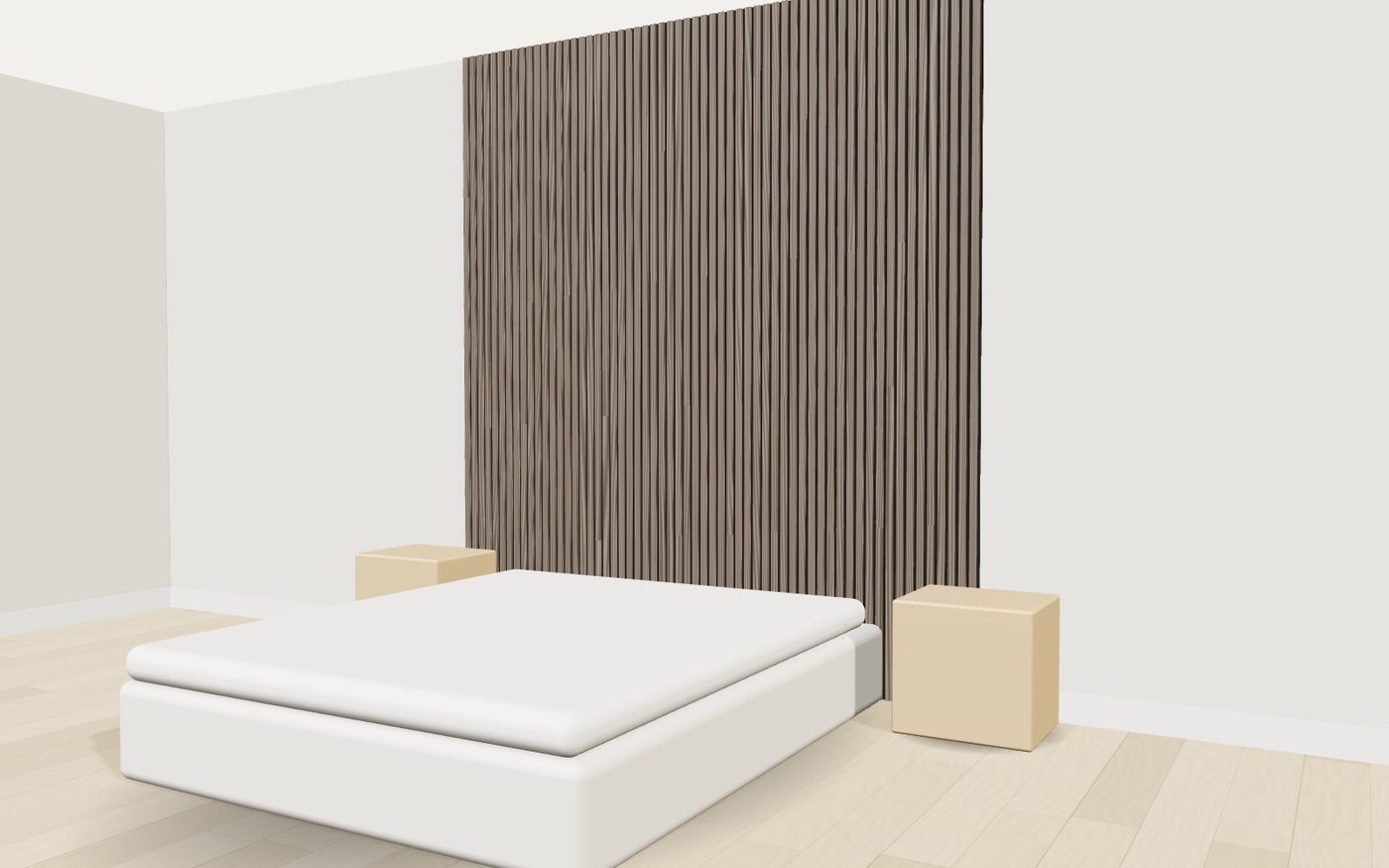
The short answer
On a flat wall, glue and screw the panels straight onto the drywall: beads of panel adhesive on the felt, then black screws through the felt between the slats, about every 30 cm. On an uneven wall, or where you want more absorption, screw them to timber battens spaced about 40–60 cm apart. Two people can hang a full-height panel in a few minutes.
Tools and materials
- Tape measure, level and a pencil or laser level for the first panel.
- Drill/driver and black panel screws, about 30–35 mm long for direct fixing.
- Panel adhesive in a caulking gun (we supply a mounting adhesive with the panels).
- Utility knife for cutting the felt, and a fine-tooth saw or track saw for cutting across the slats.
- End caps or a single slat to finish exposed ends, and timber battens if you’re batten-mounting.
Method 1: direct to the wall
- Check the wall. It should be flat, dry and sound. Fill holes and knock down high spots.
- Plan the layout. Measure the wall width and divide by 600 mm. If the last panel would be a sliver, centre the layout so both ends get an equal cut panel.
- Mark a plumb line for the edge of the first panel. Everything follows the first one, so take your time here.
- Cut to height. Leave a few millimetres at the floor and ceiling. Cut across the slats with a fine-tooth saw, face up, to avoid chipping.
- Apply adhesive in vertical beads on the felt, behind the slats.
- Set and screw. Press the panel to the line, check it’s plumb, and drive screws through the felt in the gaps, top to bottom, every 30 cm or so. Screw into studs where you can.
- Interlock the next panel. The overhanging slat of one panel covers the felt edge of the next, so the joint disappears.
- Finish the ends with an end cap or a single slat.
Method 2: on battens
- Fix horizontal battens (or vertical for horizontal panels) to the studs, about 40–60 cm apart. Pack them out until they’re flat and level.
- Optional: fill between the battens with acoustic insulation for better low-frequency absorption.
- Screw each panel to every batten through the felt between the slats. No adhesive is needed.
- Finish the ends and the top and bottom edges as above.
Battens also leave a service space behind the panels, which helps for cabling or a back-lit LED detail.
Working around outlets, switches and corners
- Outlets and switches: turn off the power, mark the box on the panel and cut the opening with a jigsaw or multi-tool. Use box extenders so the device sits flush with the slats, as your electrician and local code require.
- Inside corners: cut the felt so the last slat meets the return wall cleanly.
- Outside corners: mitre the panels or cap the edge with an L end cap.
- Ceilings: screw into the framing or battens. Don’t rely on adhesive overhead.
On a multi-unit job
Put the panel walls on the drywall schedule like any other finish: board, tape and prime first, then panels after paint and before baseboard where the panels stop. Order lengths per wall from the drawings so there’s no cutting waste, and store panels flat indoors for a couple of days before they go up.
Notes
These are general guidelines. Follow the adhesive and fastener maker’s instructions and your local code, and use a licensed electrician for any electrical work.
Common questions
Can you install acoustic panels on drywall?
Yes. Glue and screw them straight onto painted drywall, screwing into studs where you can.
Do you need battens?
Not on a flat wall. Battens help on uneven walls, on ceilings and where you want more absorption from the air gap behind.