The short answer
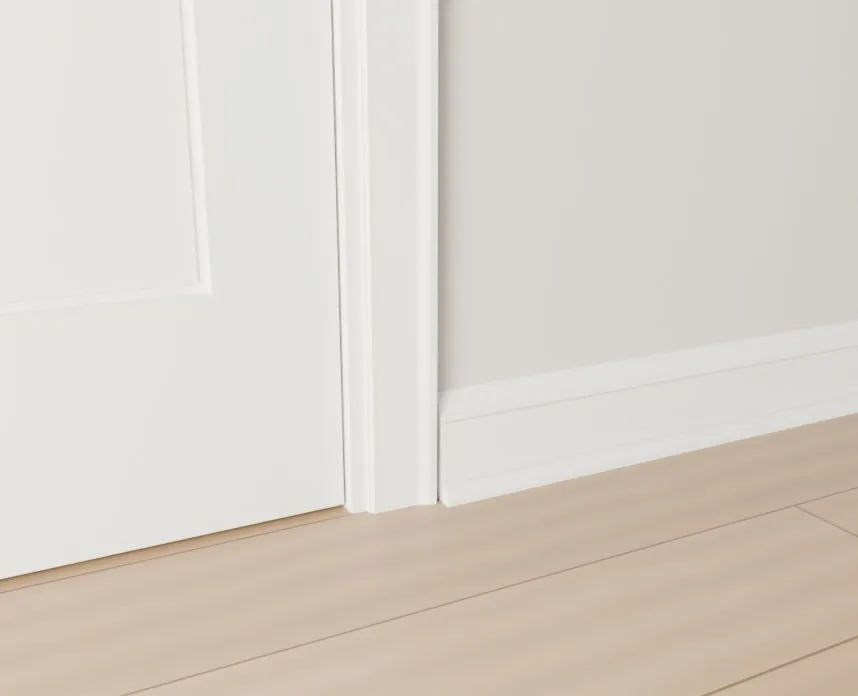
Shoe moulding covers the gap between the baseboard and the floor. Floating floors such as laminate need an expansion gap of at least 1/4″ at the walls, and when the baseboard alone can’t hide it, shoe does. Quarter round is the standard. Base shoe is taller and slimmer, so it sits tighter to the baseboard.
When you need it
- Floating floors. Laminate and many vinyl plank floors move with the seasons and need a gap at every wall. If the baseboard went on before the floor, or doesn’t sit low enough, shoe covers the gap.
- Uneven floors. Shoe bends to follow a floor that dips, where stiff baseboard would leave a gap.
- Carpet. Usually not. Carpet tucks under the baseboard.
- Tile. Usually not, if the baseboard sits on the tile and the gap is caulked.
Quarter round or base shoe
| Quarter round | Base shoe | |
|---|---|---|
| Shape | A quarter circle | Taller than it is deep, flat back |
| How far it sticks out | As far as it is tall | Less, so it’s more discreet |
| Best for | Standard gaps and the usual look | Modern baseboard and tight hallways |
| Our profiles | SE001 Quarter Round, SE002 Large for bigger gaps | SE003 Base Shoe |
Installing it
- Nail to the baseboard or wall, never the floor. A floating floor has to move under the shoe.
- Size it to the gap. The shoe has to cover the full expansion gap, or the gap shows when the floor shrinks in winter.
- Order it with the baseboard. Shoe follows the baseboard run, so the footage is the same. We take both off the floor plans. See the takeoff guide.
- Paint it with the baseboard. Ours comes in the same factory primer. See painting primed trim.
Sources
- Recommended expansion gap for laminate flooring, BestLaminate
- Shoe moulding profiles, Premier Building Products
Code requirements change and local rules vary. Confirm sizes and clearances with your designer and building department before ordering. We supply doors, trim and hardware; we’re not a code consultant.