The short answer
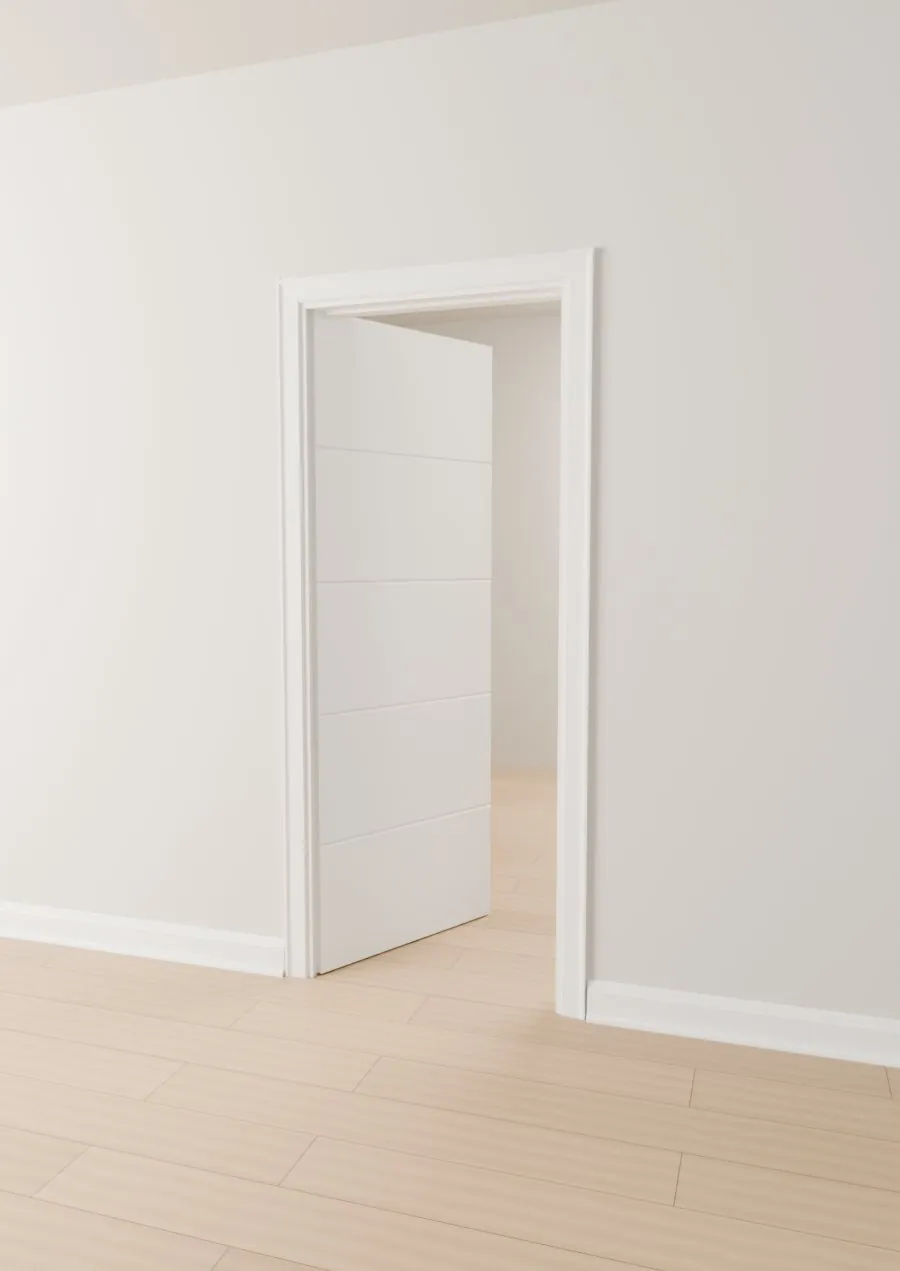
The handing of a door is which side the hinges are on and which way it swings. The trouble is that the industry reads it two ways, and the two can give opposite answers for the same door. The safest order is a plan with the door swings drawn on it, or a schedule that says hinges left or right as seen from the side the door opens toward.
The two ways handing gets read
| Method | Where you stand | How you name it |
|---|---|---|
| Back to the hinges | In the opening, with your back against the hinge jamb | If the open door is on your left, it’s left-hand. On your right, right-hand. Many interior door suppliers use this. |
| Secure side | On the outside, or “key side”, of the door | Hinges on the left and the door swings away from you: left-hand (LH). Swings toward you: left-hand reverse (LHR). Same for RH and RHR. Architects and commercial hardware use this. |
For a bedroom door, “outside” is the hallway. Stand in the hallway and the door swings away from you into the room, so both methods agree. Stand inside a closet and they don’t. That’s how a site ends up with a stack of doors that hinge on the wrong side.
What to send instead
- Marked plans. A swing arc drawn on each opening shows the hinge side and the direction in one picture. Nothing to interpret.
- Or a written rule. If you list handing in a schedule, say how you read it once at the top: “Hinge side as seen from the side the door opens toward.”
- One line per opening. Opening number, room, size and handing. See how to write a door schedule.
Watch the mirrored units
Multi-unit buildings often have the same suite flipped left to right on either side of a corridor. Every door in the flipped suite changes handing. Count the original and the mirror as two unit types, or the left-hand and right-hand totals will be wrong across the whole order.
Where handing matters
| Door | Needs handing? |
|---|---|
| Prehung swing door | Yes. The hinges are set in the jamb at the factory. |
| Slab with hinge prep | Yes, if you ask us to mortise the hinges. |
| Plain slab | No. Your carpenter sets the hinge side on site. |
| Bifold and bypass sets | Bifolds can be hung to fold either way. Bypass sets don’t have a hand. |
| Barn door | No, but note which side of the opening the door parks on, so the wall there is clear. |
We confirm the handing of every prehung door on the quote before production. Specs can’t change once production starts, so it’s the last chance to catch a flipped suite.
Sources
Code requirements change and local rules vary. Confirm sizes and clearances with your designer and building department before ordering. We supply doors, trim and hardware; we’re not a code consultant.